

Running often becomes part of your routine before you even realise it.
It starts small. A short run after work. A weekend jog to clear your head. Over time, it becomes something you enjoy.
Then one day, something feels different.
A slight discomfort in your knee. Nothing too serious at first. You stretch a little more, maybe slow down, and continue.
But instead of going away, it lingers.
You’re not injured enough to stop completely, but not comfortable enough to run without thinking about it.
So… should you keep running?
The answer is not as simple as yes or no.
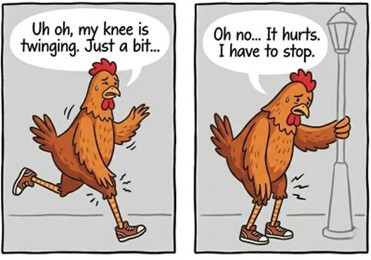
Many people rely on pain as their guide. If it hurts, stop. If it feels okay, keep going. It sounds logical, but pain is not a reliable measure of what your body can handle.
By the time you feel it, your body has often already been compensating or under stress for a while. Some runs may feel fine in the moment, only for your knee to ache later in the day or the next morning.
Knee pain also does not always mean you need to stop running completely. More often, it is about how the movement is being repeated. Running places consistent load on your knee, and when that same pattern continues without adjustment, irritation can build up.
Instead of stopping everything, small changes can help reduce the strain. Shortening your runs, slowing your pace, or avoiding slopes and uneven ground for a while can make a noticeable difference.
At the same time, stopping all activity is not always helpful. Your body responds well to movement, just the right kind. If running causes discomfort, switching to lower-impact options like cycling or swimming can help you stay active while giving your knee space to settle. Strength exercises, when done properly, can also support the muscles around your knee without adding unnecessary stress.
When recovery feels slow, it is natural to want to do more. More runs, more exercises, more effort. But with knee pain, pushing harder can sometimes make things worse. It is not about how much you can do, but how well you manage the load on your body. A better question to ask is what level of activity allows you to move without making the discomfort worse.
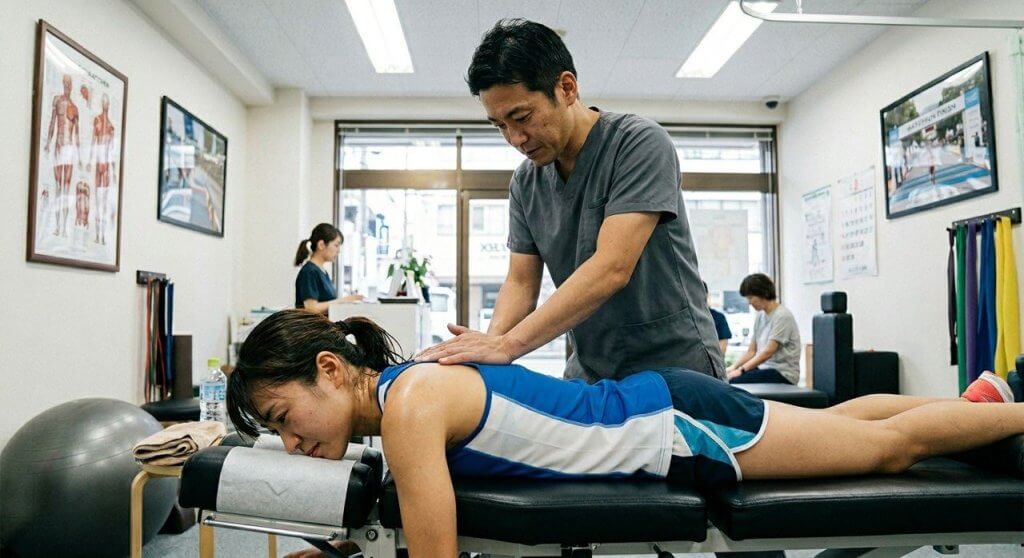
This is also where looking at the body as a whole becomes important. In chiropractic care, we do not just focus on the knee itself, but how the entire body is moving. The way your hips, pelvis, and even your spine function can influence how load is distributed when you run.
If one area is not moving well, another area often takes on more stress. Over time, that repeated compensation can show up as discomfort in places like the knee.
That is why simply treating the painful area is not always enough. Understanding your movement patterns and making small adjustments can often make a bigger difference than expected.
 If your knee discomfort keeps coming back, it is usually a sign that something needs to change. Understanding what triggers, it, how much your body can currently tolerate, and how to gradually build back strength can make the process much smoother.
Running should be something you enjoy, not something you constantly worry about.
And sometimes, a small change in how your body moves can be the turning point.